Cognitive Load
Sustained attention depletes working memory resources over time. Strategic pauses allow for partial restoration of these cognitive capacities.
An analytical look at the relationship between structured rest and sustained focus. Understanding the patterns behind effective work-rest cycles.
Research in cognitive science suggests that periods of rest are not interruptions to productive work — they are an integral part of how the brain processes, consolidates, and prepares for new information.
Sustained attention depletes working memory resources over time. Strategic pauses allow for partial restoration of these cognitive capacities.
Human attention follows natural fluctuations. Aligning work patterns with these rhythms may support more consistent output quality.
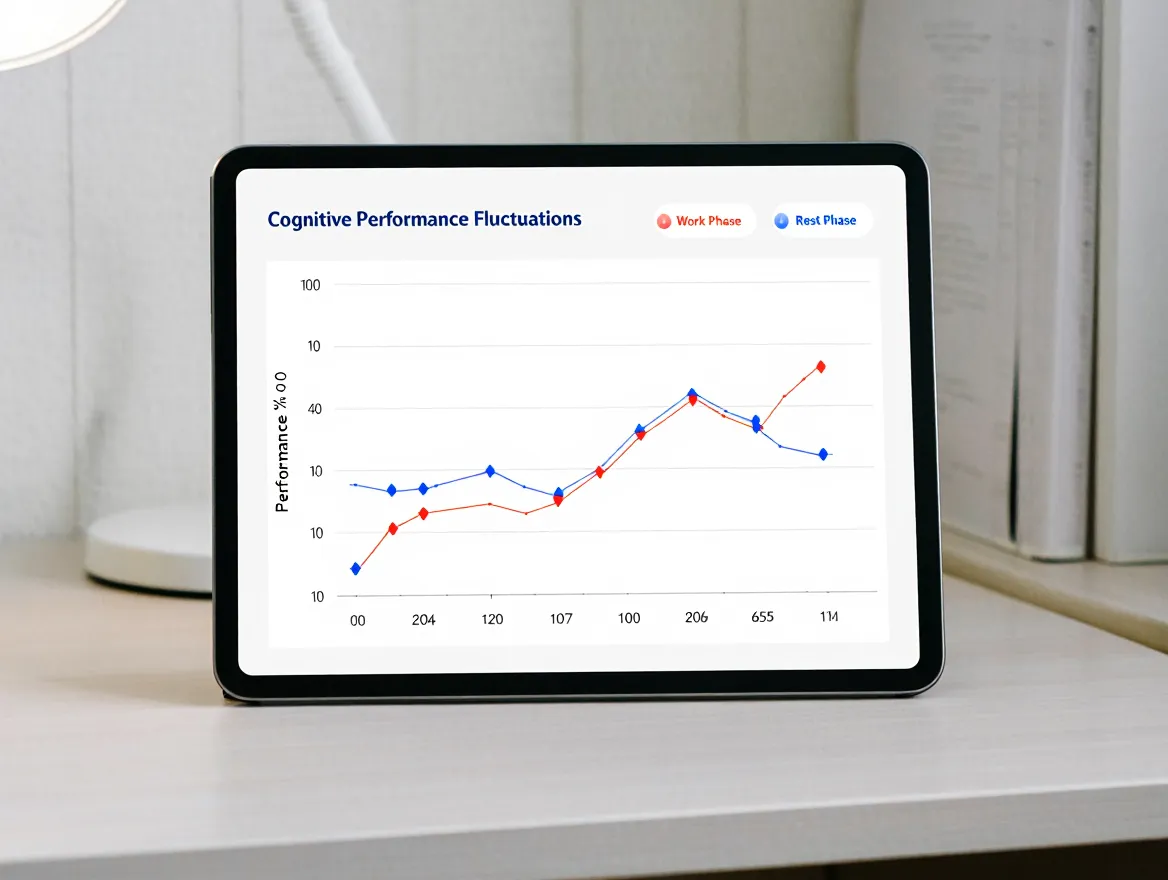
Studies indicate that task performance tends to decline with extended unbroken work periods, with recovery observed after brief rest intervals.
The concept of alternating between focused work and deliberate rest has been studied across multiple disciplines, from cognitive psychology to organizational behavior.
Rather than viewing productivity as a continuous output stream, researchers have observed that it more closely resembles a wave pattern — with peaks of high engagement and natural valleys where recovery occurs.
Research distinguishes between several types of work interruptions, each with different characteristics and potential roles in cognitive maintenance.
Brief pauses such as looking away from a screen or stretching. These may help reduce eye strain and physical tension during focused work.
Walking, light movement, or a change of environment. Often associated with the Pomodoro technique and similar structured approaches.
Longer intervals that allow for more complete mental disengagement. These may support deeper cognitive recovery between work sessions.
Substantial rest periods that may include meals or restorative activities. These align with natural ultradian rhythm boundaries.
Attention Restoration Theory proposes that natural environments and non-demanding activities may help restore directed attention after periods of concentrated effort.
Research on biological rhythms suggests that the body cycles through periods of higher and lower alertness approximately every 90 minutes, even during waking hours.
Studies on vigilance and sustained attention have documented measurable declines in performance accuracy when tasks continue without interruption for extended periods.
Some research suggests that brief rest periods may support memory consolidation processes, potentially strengthening retention of recently learned information.
Notice when your attention naturally begins to wander or when task switching becomes more frequent. These may be signals from your body's internal rhythms.
Rather than waiting until fatigue sets in, consider scheduling breaks proactively. Structured rest tends to be more restorative than reactive pauses.
Different types of breaks may serve different recovery functions. Physical movement, environmental change, and sensory rest each address different aspects of cognitive fatigue.
Optimal work-rest patterns vary between individuals. What research describes as averages may not reflect your personal cognitive rhythm.
All materials and practices presented are educational and informational in nature and are aimed at supporting general well-being. They do not constitute medical diagnosis, treatment, or recommendation. Before applying any practice, especially if you have chronic conditions, consult a physician.